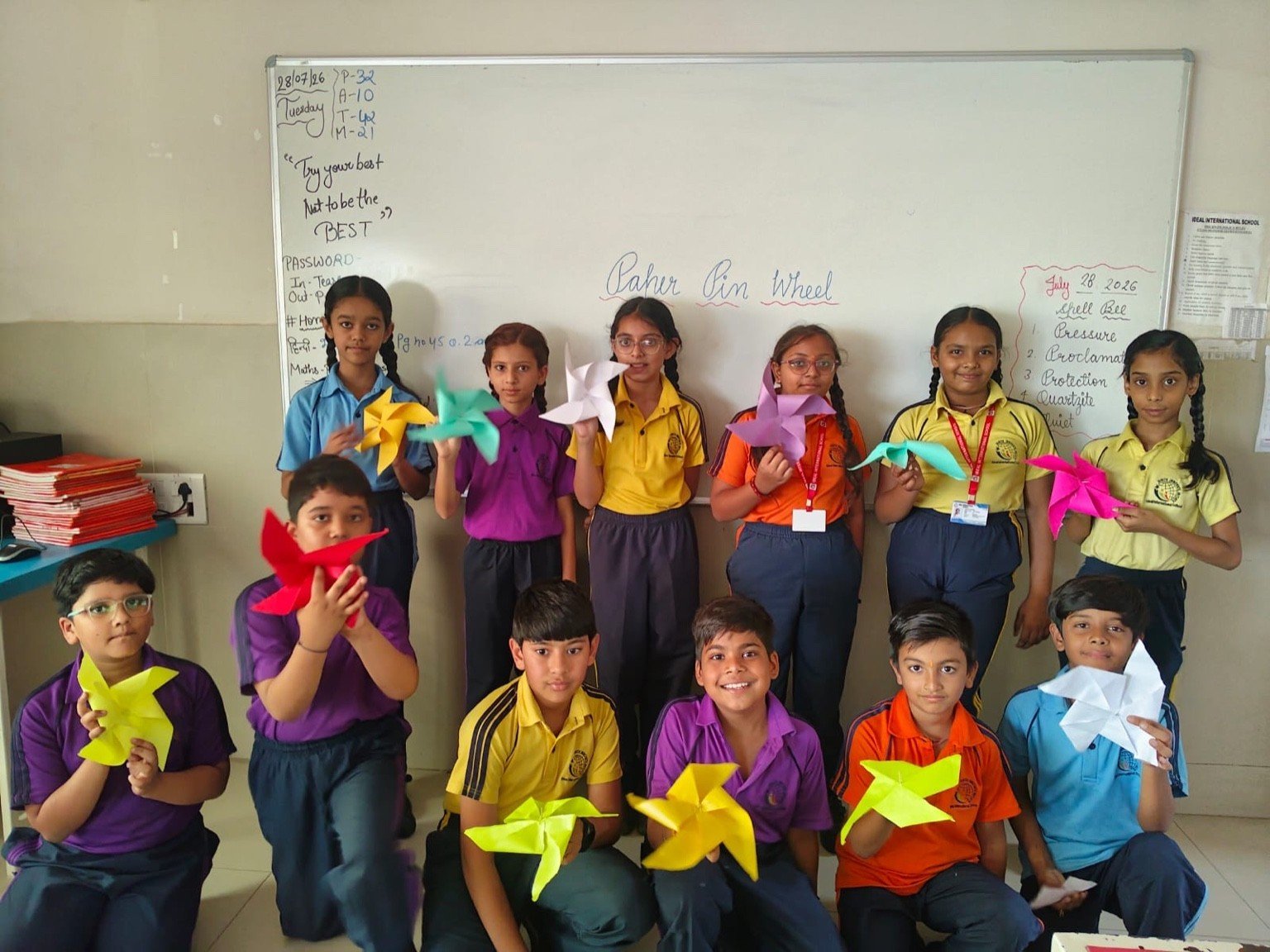
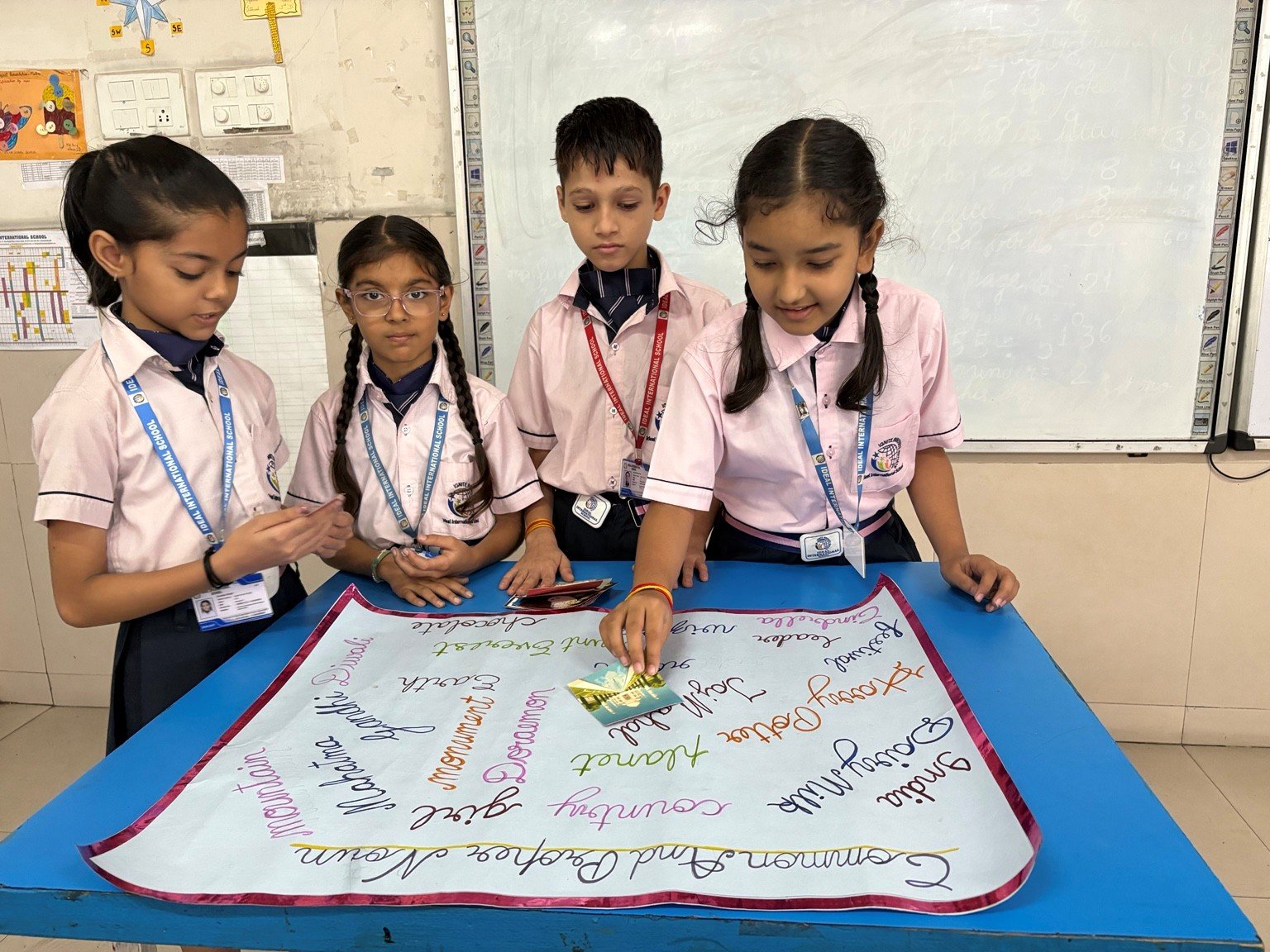
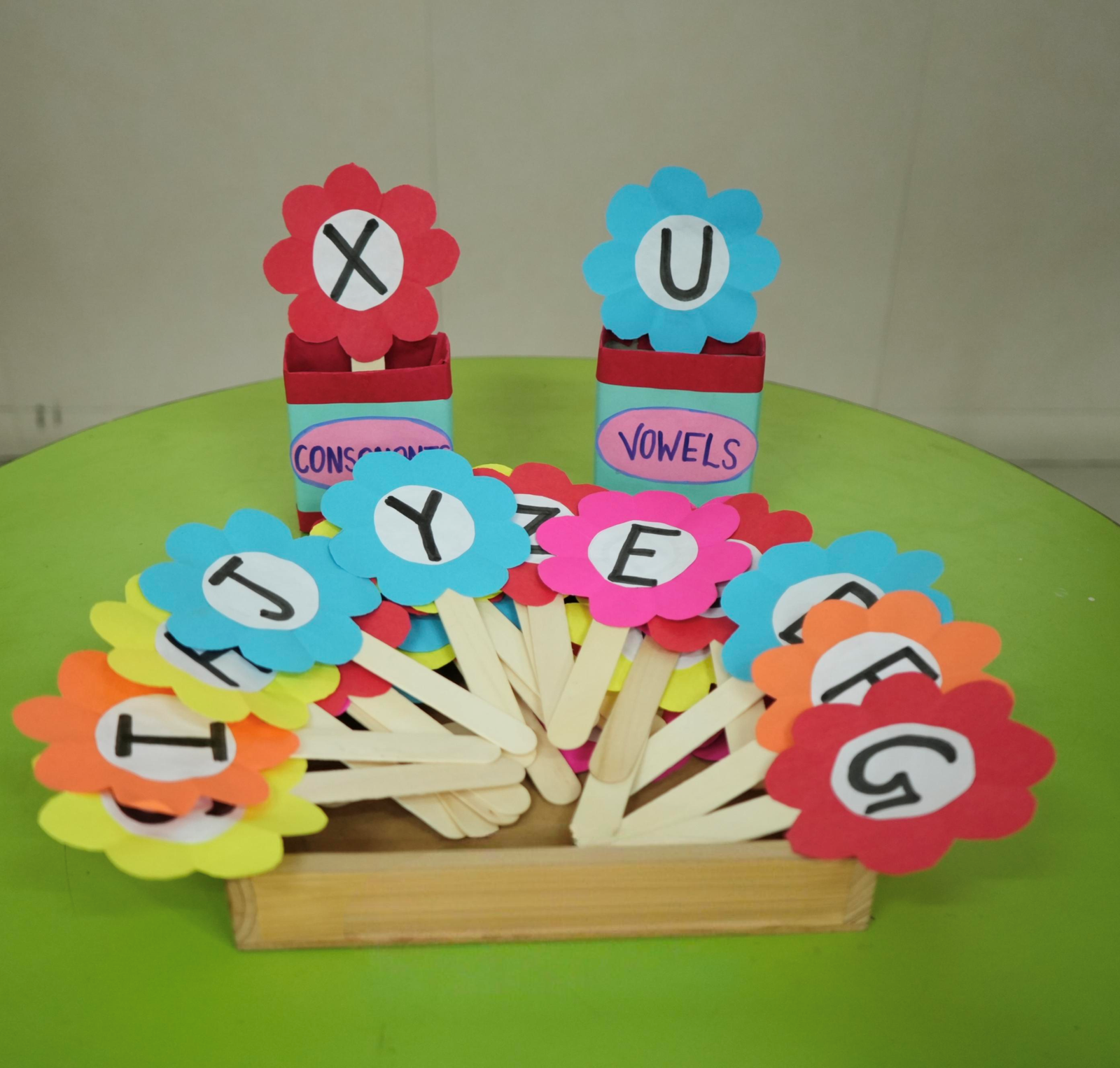
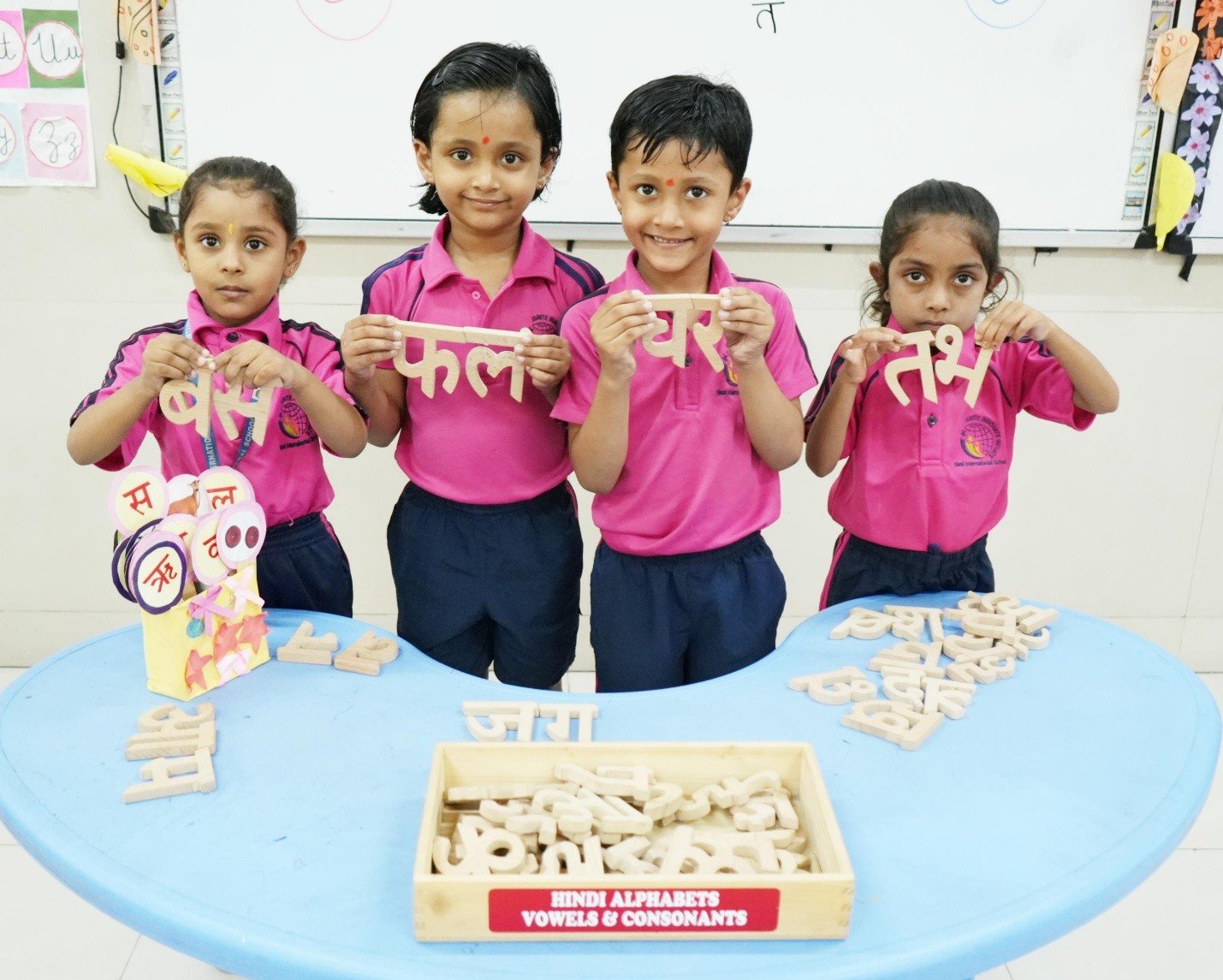
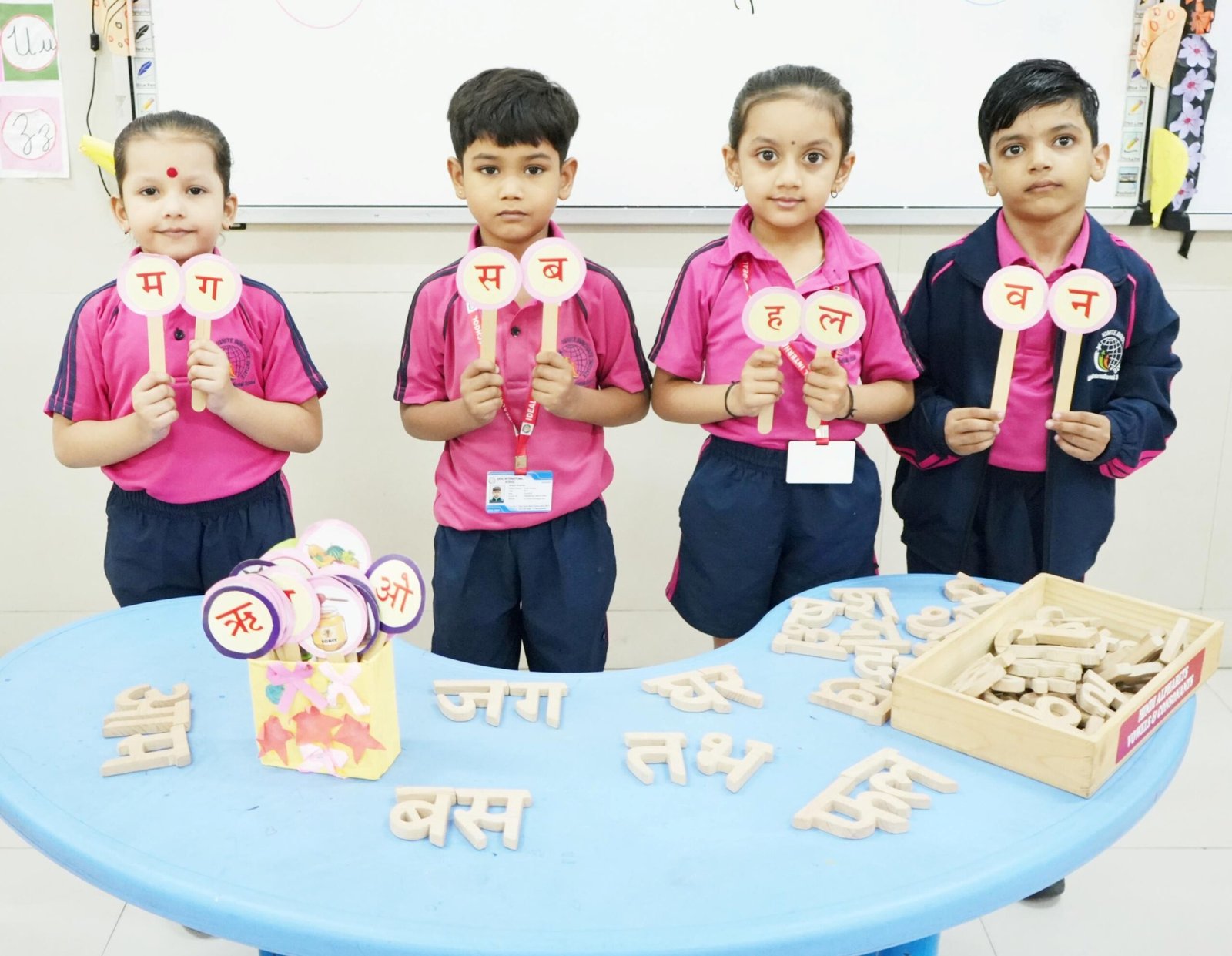
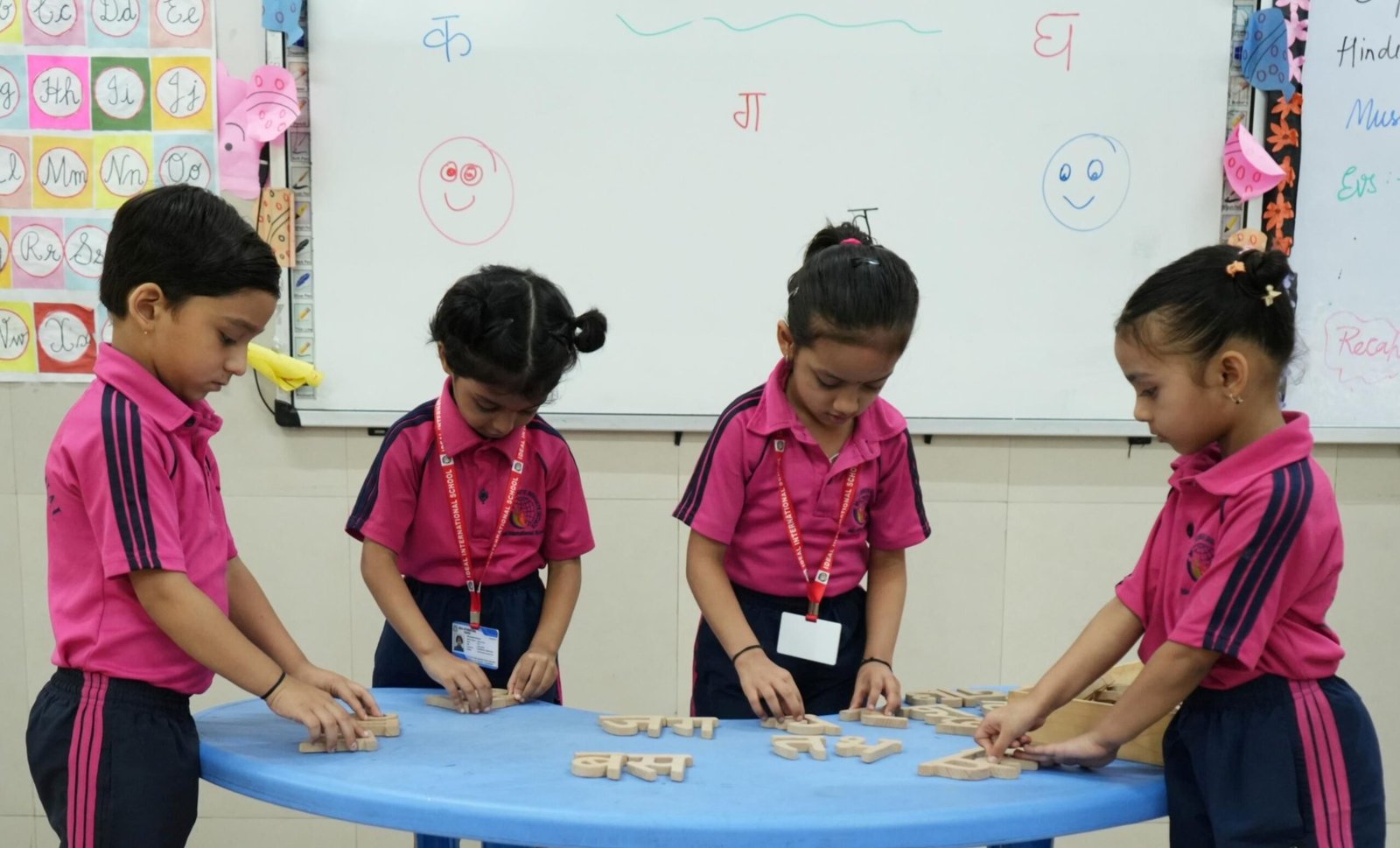
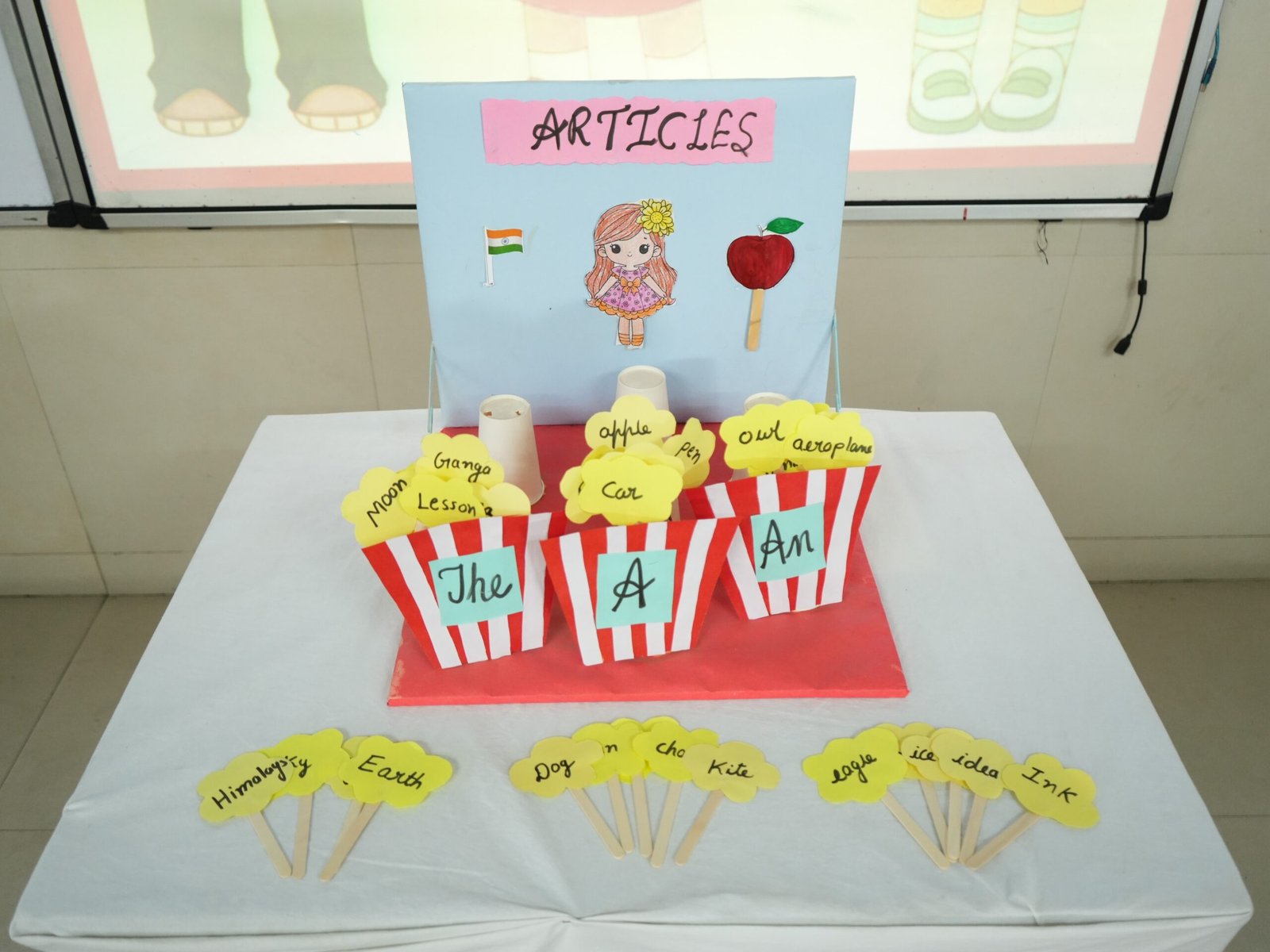
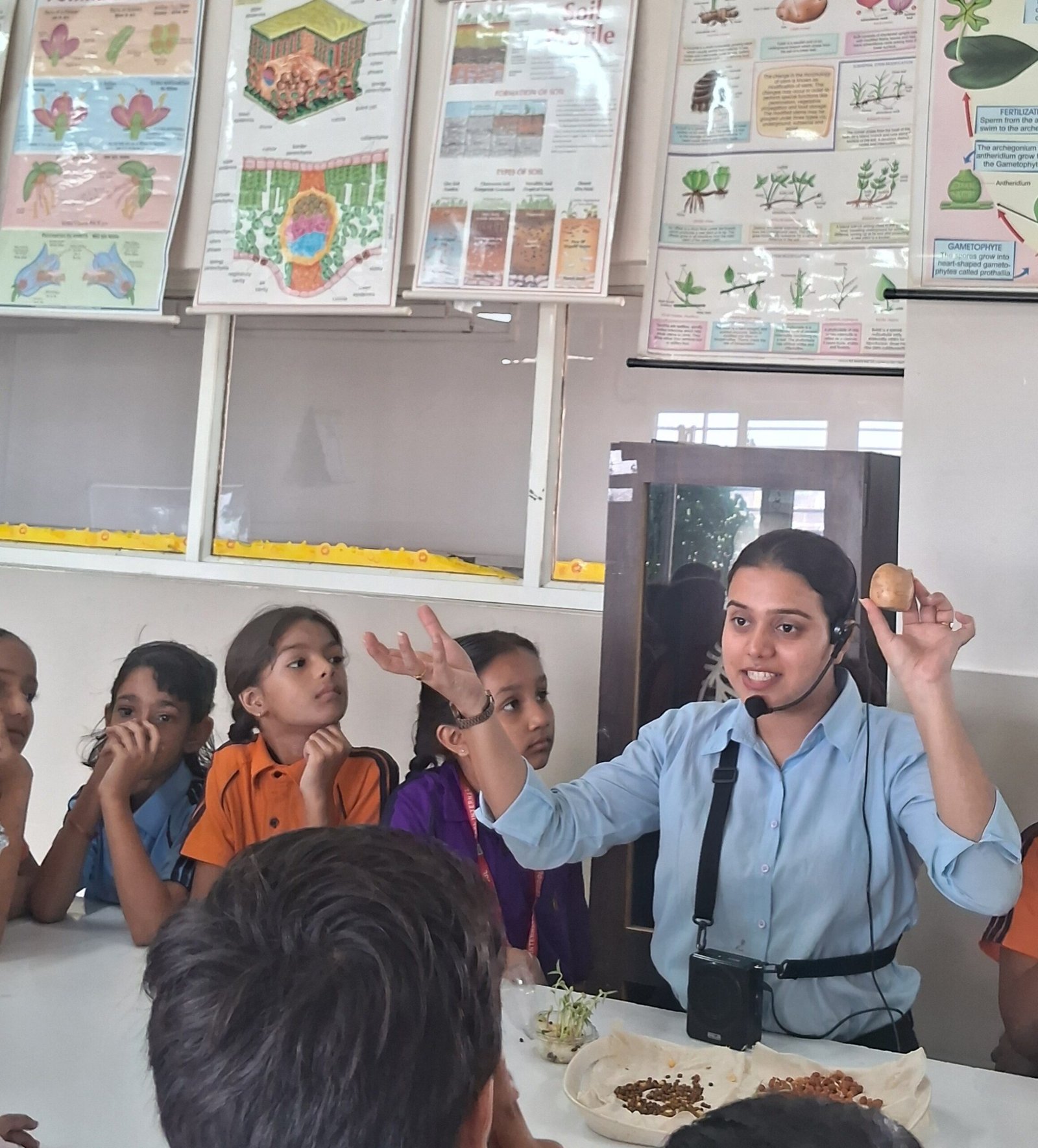
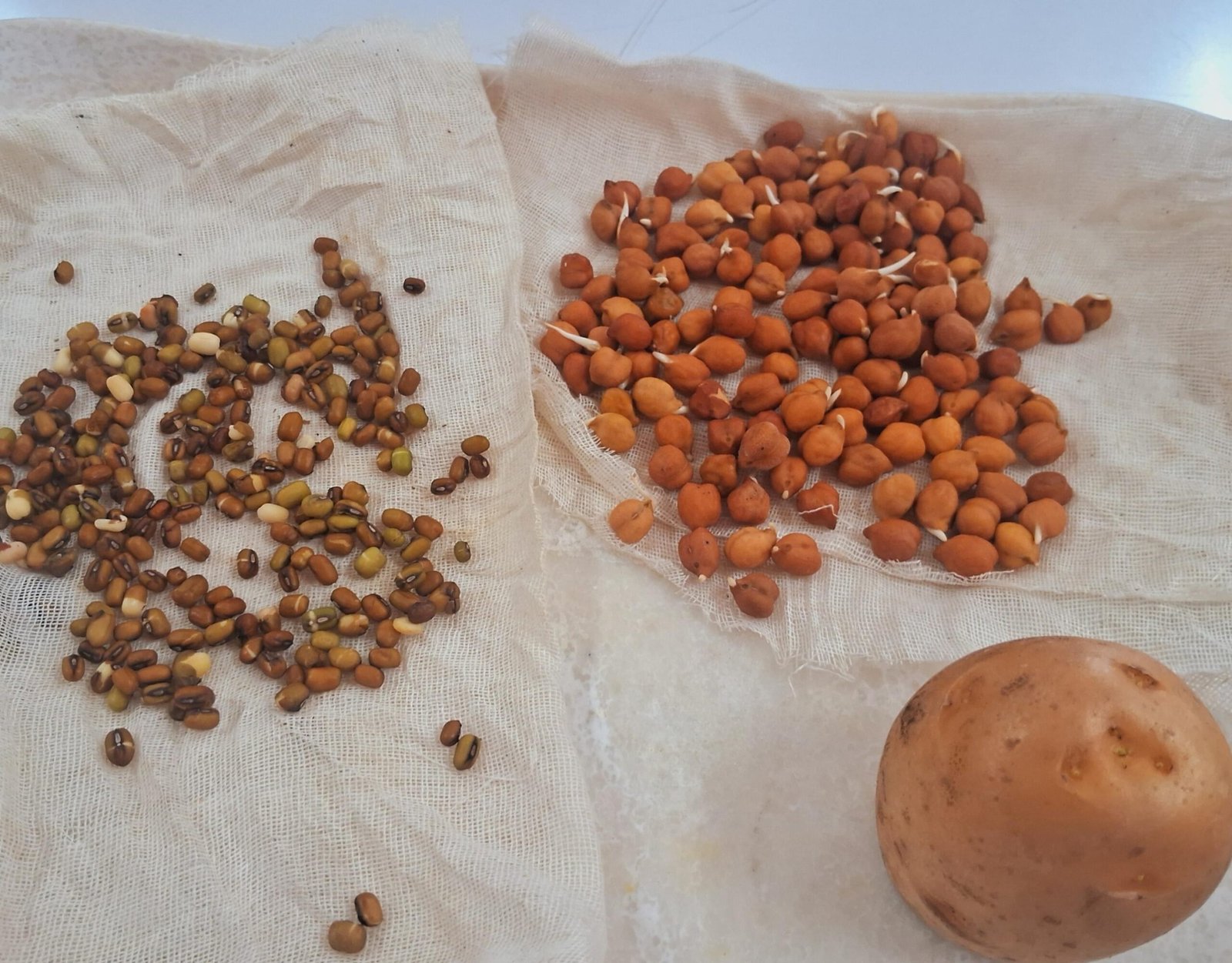
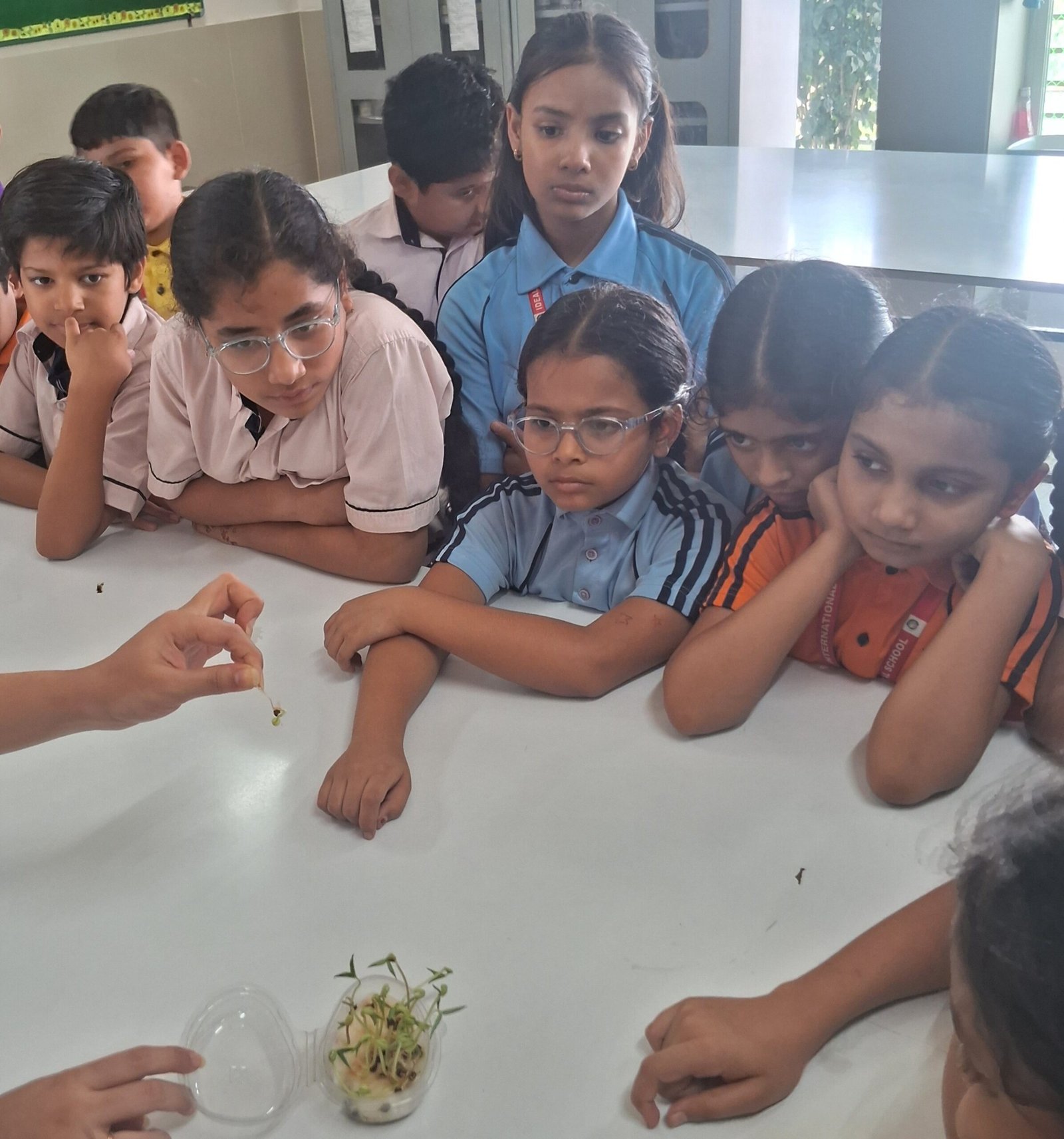
At Ideal International School, learning becomes more meaningful when it is combined with creativity and active participation. Keeping this vision in mind, an engaging classroom activity on “Palindromes – The Special Words” was conducted for the students of Grade 1.
The session began with an interactive PowerPoint presentation where students were introduced to the fascinating world of palindromes—words and numbers that read the same both forward and backward. Through colourful visuals and simple examples such as MADAM, LEVEL, RADAR, MOM, and NUN, students quickly understood the concept and participated with great enthusiasm.
To make the learning experience more memorable, a creative hands-on activity was organised using ice-cream sticks and letter cards. Students enthusiastically built palindrome words, identified symmetrical letters, and proudly presented their work before the class. The cheerful classroom slogan, “Here or There, I Look Same from Everywhere!”, added excitement and helped reinforce the concept in a fun and memorable way.
The activity encouraged observation, logical thinking, creativity, communication skills, and teamwork. Every child actively participated, confidently shared ideas, and enjoyed discovering how special palindrome words can be.
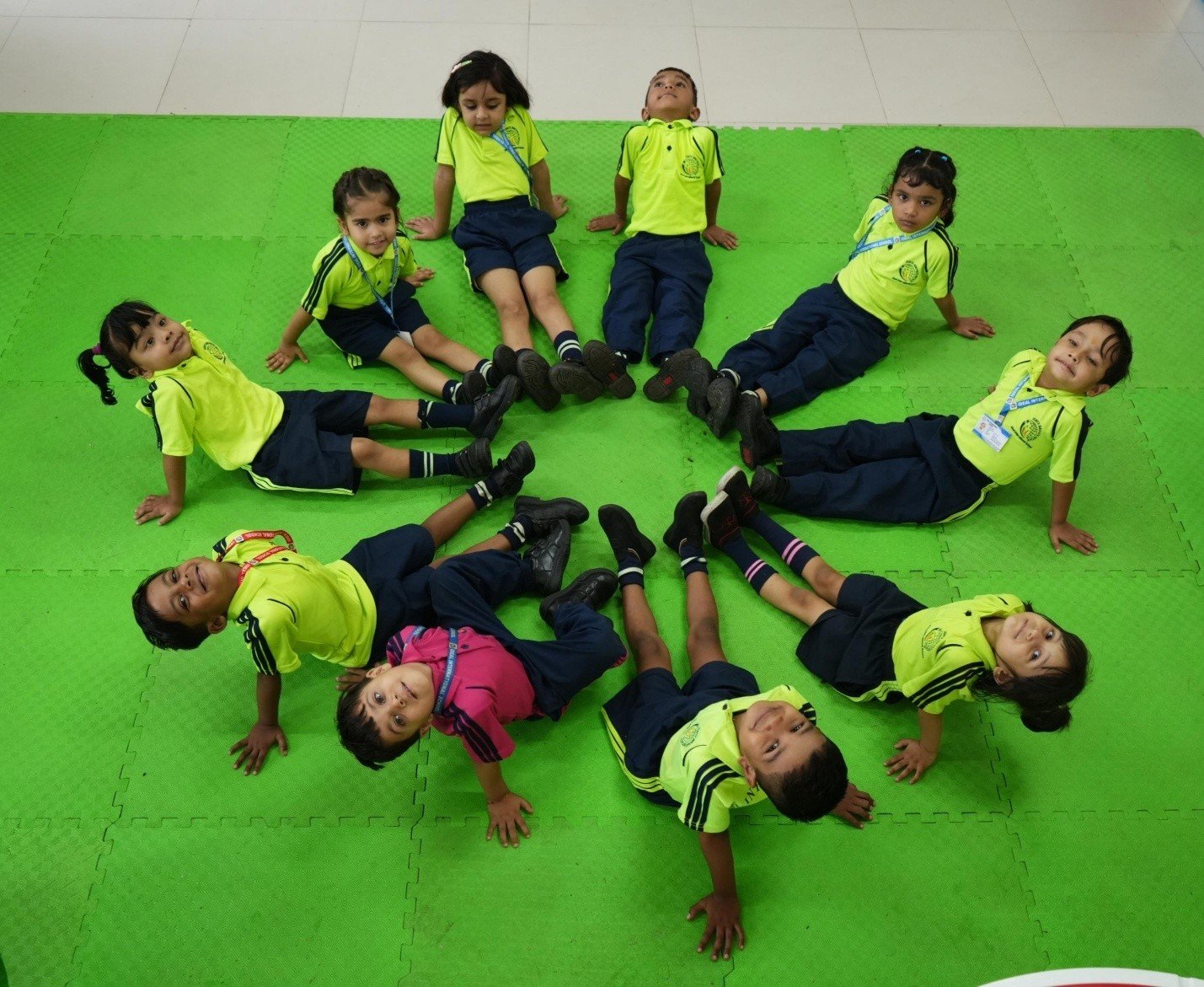
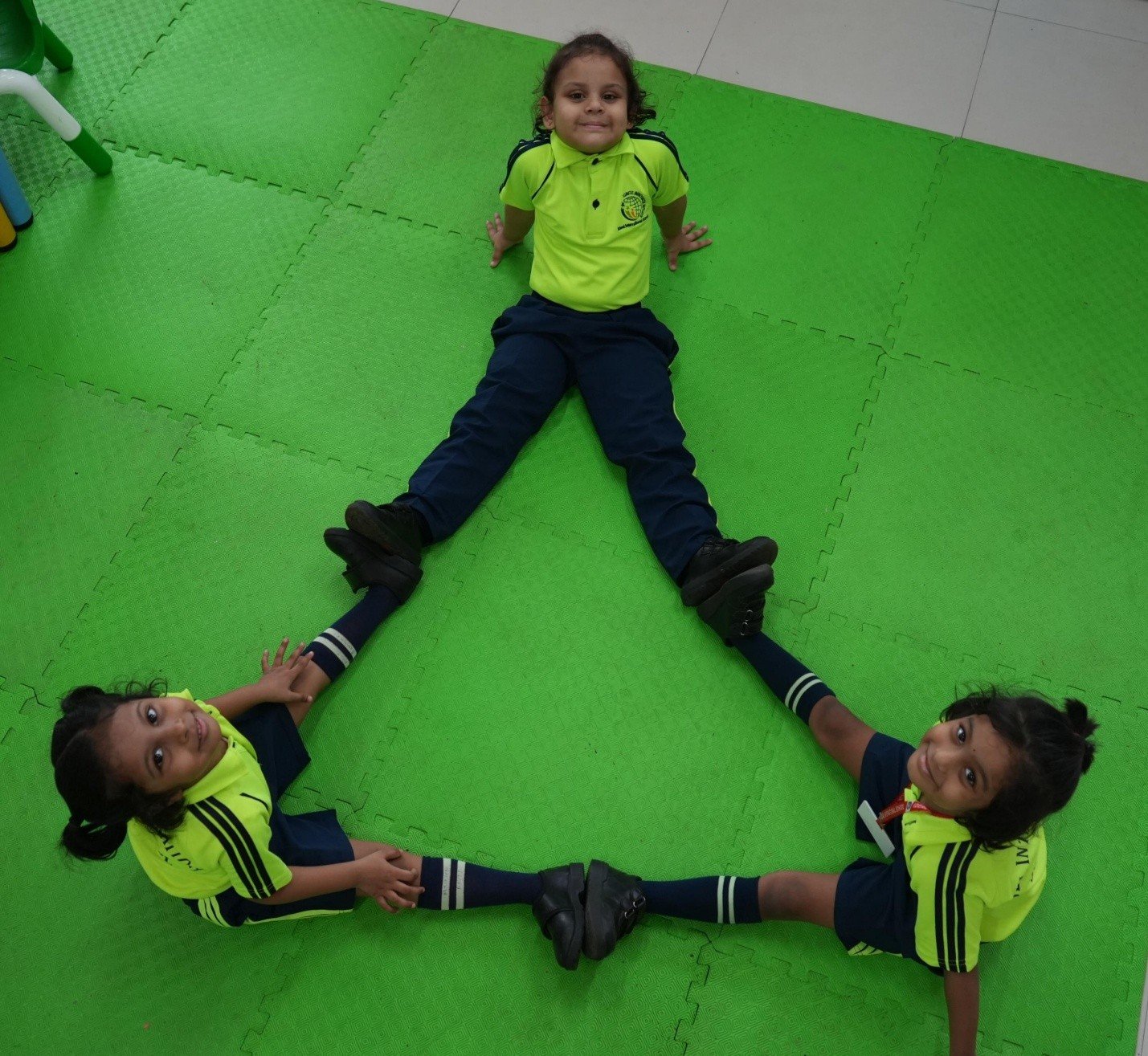
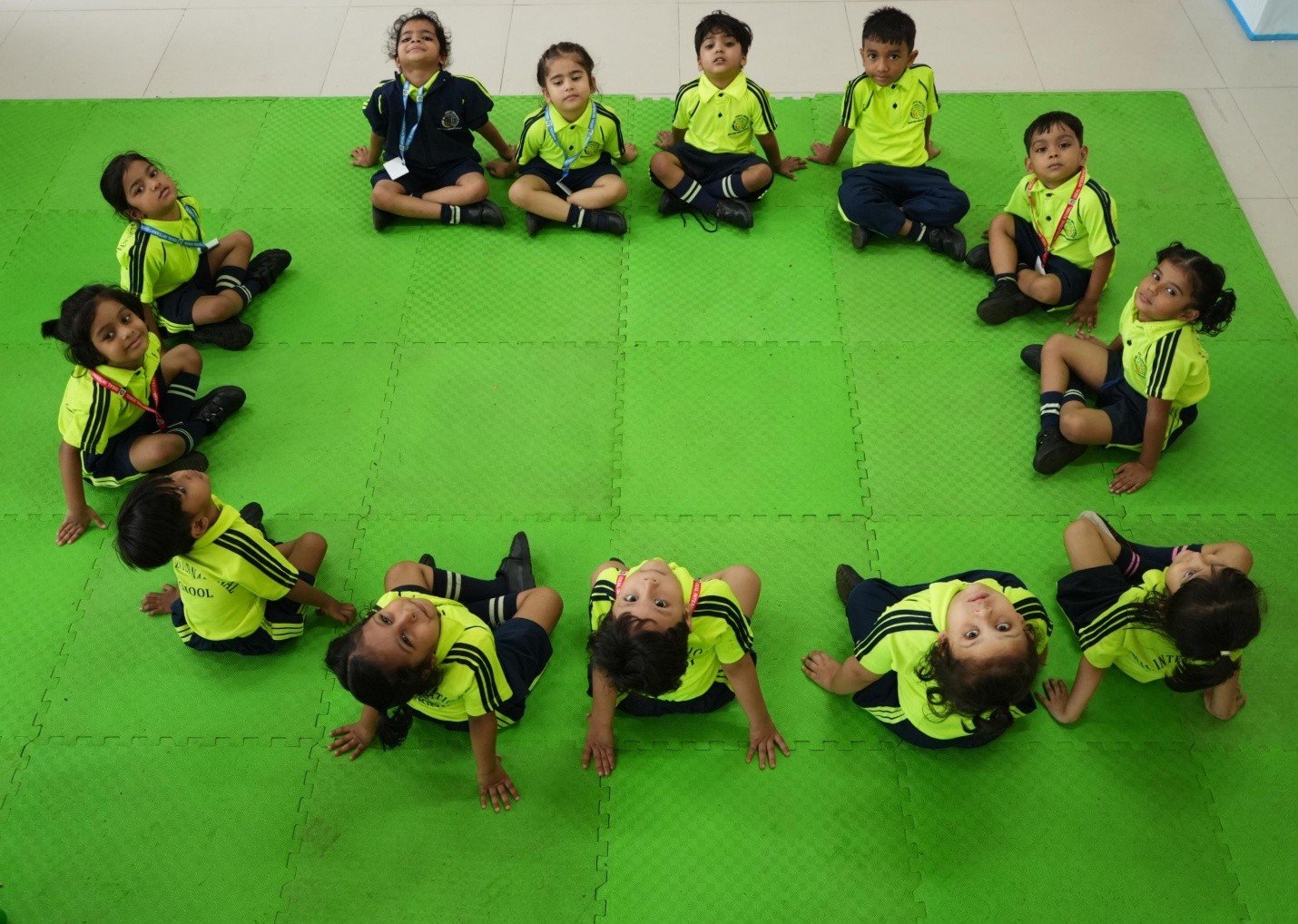
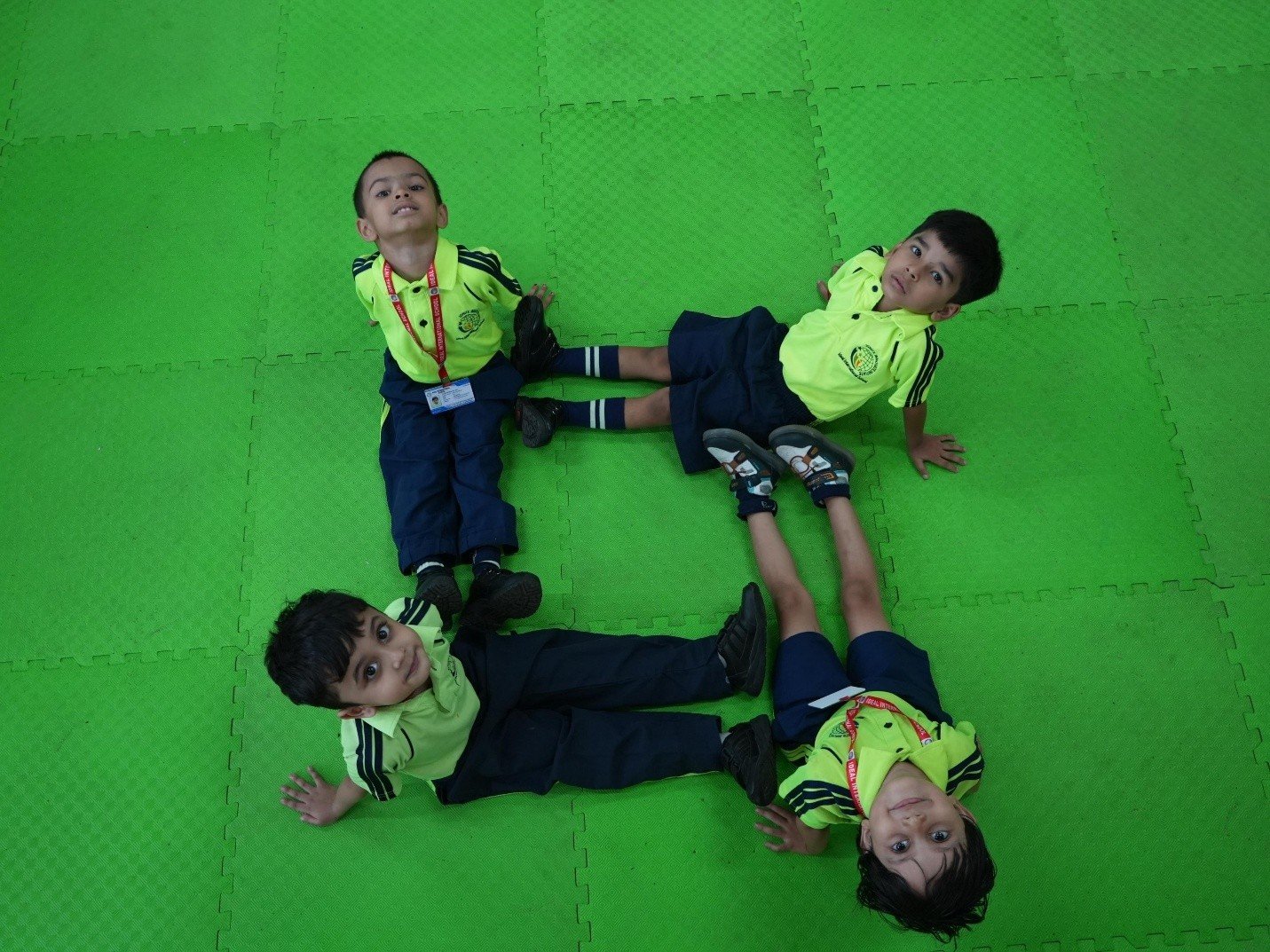
In the Grade 2 Mathematics class, students explored the concept of “Addition on Number Line” through a fun and interactive learning activity. To help children understand addition in a practical way, a number line was created on the classroom floor, and students actively participated by representing numbers and mathematical symbols.
During the activity, selected students held number cards and operation signs (+ and =), while others used the number line to demonstrate the process of addition by moving forward step by step. This hands-on approach enabled learners to visualize how numbers increase when added and helped them understand the concept of counting forward on a number line.
Through this engaging activity, students strengthened their addition skills, improved number recognition, and developed logical thinking abilities.
The activity also encouraged active participation, teamwork, confidence, and joyful learning, making mathematics both meaningful and enjoyable for young learners.
Grade 2 Mathematics Activity – Addition on Number Line1
Grade 2 Mathematics Activity – Addition on Number Line4
Grade 2 Mathematics Activity – Addition on Number Line3
Grade 2 Mathematics Activity – Addition on Number Line
Introducing the topic of Seasons is always an exciting and hands-on learning experience for our students. Through fun, activity-based lessons, children explored the seasons-summer, monsoon and winter-by observing, creating, and sharing. Our learning objectives centered around helping students identify each season’s unique features such as weather, clothing, and nature’s changes.
Learning is not only about gaining knowledge from books; it is also about developing values and understanding how our actions affect others. As a part of the Grade 4 English Literature chapter ‘Skipping Shoes’, students participated in an interactive activity that focused on understanding good and bad behaviour. The activity encouraged students to think about their actions, choices, and the way they should behave with parents, elders, teachers, friends, and everyone around them.Through this activity, students learned to, Identify good and bad behaviours ,understand the importance of respect and kindness,communicate ideas confidently ,develop empathy towards others
Activity Overview
Students participated in an interactive role-play activity where they explored different real-life situations related to behaviour and manners and enacted the situation provided. The other team observed the performance, identified the behaviour enacted and discussed whether it represented a good behaviour or a bad behaviour. After analysing the situation, students classified it under Do’s and Don’ts. Through this activity, students developed a better understanding of respectful actions, kindness, good manners, and the importance of making positive choices in everyday life
Glimpses of the Activity :
Students worked together and discussed different situations and identified whether they showed good or bad choices.
0ne team performed a situation through role play, while the other team carefully observed the action and identified the behaviour being shown.
Students discussed the given situations and used their understanding to make the correct behaviour choice.
Teams collaborated and discussed their role-play ideas before presenting the situations to their classmates.
Students actively participated in the activity by analysing the situation, discussing the behaviour, and deciding whether it was a Do’s or a Don’ts action.
Students shared their viewpoints and learned from each other’s experiences and ideas.
Students presented real-life situations through acting and learned to differentiate between respectful behaviour and inappropriate actions.
Introducing the topic of Seasons is always an exciting and hands-on learning experience for our students. Through fun, activity-based lessons, children explored the seasons-summer, monsoon and winter-by observing, creating, and sharing. Our learning objectives centered around helping students identify each season’s unique features such as weather, clothing, and nature’s changes. We began with simple observation walks around the school to notice how the environment changes. Students then engaged in sorting activities like matching objects to the correct season, Storytelling, songs, and art projects such as leaf printing or snowflake crafting made learning joyful and meaningful. Through these activities, children not only built vocabulary and observation skills but also developed an appreciation for nature’s rhythm and how seasons affect our lives.
A team representative confidently read the sports-based question, showing readiness and leadership.
Students eagerly raised their hands, reflecting enthusiasm and active participation.
A participant carefully read the quiz slip, demonstrating focus and understanding.
A student answered confidently, showing clear comprehension of the chapter.
Another team member responded promptly, highlighting teamwork and shared responsibility.
Through the Sports Challenge, students successfully revised and recalled important ideas from the chapter “The Wrestler.” The activity helped them develop confidence in reading and answering questions aloud while also improving their listening and comprehension skills. Working in teams encouraged cooperation, mutual support, and respect for others’ answers. The pass-on system ensured continuous engagement and promoted quick thinking. Overall, the challenge strengthened subject understanding while nurturing sportsmanship, teamwork, and a positive learning attitude among the students.
Introducing the topic of Seasons is always an exciting and hands-on learning experience for our students. Through fun, activity-based lessons, children explored the seasons-summer, monsoon and winter-by observing, creating, and sharing. Our learning objectives centered around helping students identify each season’s unique features such as weather, clothing, and nature’s changes. We began with simple observation walks around the school to notice how the environment changes. Students then engaged in sorting activities like matching objects to the correct season, Storytelling, songs, and art projects such as leaf printing or snowflake crafting made learning joyful and meaningful. Through these activities, children not only built vocabulary and observation skills but also developed an appreciation for nature’s rhythm and how seasons affect our lives.
Stories have always been a magical way to teach life lessons, spark imagination, and build confidence in young learners. To bring this magic alive, our classroom turned into a world of puppets and imagination with The Story of Pinocchio. This engaging classroom activity combined literature, art, and drama — all in one exciting project! Students not only learned about the classic tale of Pinocchio, Geppetto, and the Fairy, but also stepped into the shoes of storytellers, artists, and performers.
Using colorful craft materials, they designed and decorated their puppets with creativity and joy. Every puppet had its own unique touch — some funny, some expressive, and some incredibly artistic!
Acting Out Their Own Stories
Students used their puppets to create and act out their own version of the Pinocchio story. They wrote short dialogues, practiced expressions, and performed in front of their classmates with excitement and laughter filling the room.
The conversations between Pinocchio, Geppetto, and the Fairy came alive in the students’ voices. It was inspiring to see how each group added their own twist — some added humor, while others introduced moral lessons of honesty, friendship, and kindness.
Students confidently enacting their story with handmade puppets.
➡️ The classroom turned into a lively stage where imagination met creativity.
Learning through Creativity
This activity was not just about art or acting — it was about expression, teamwork, and imagination. Students learned to:
Work collaboratively with peers
Express emotions through dialogue and action
Develop storytelling and communication skills
Understand the moral lessons of honesty and responsibility
As a teacher, watching their enthusiasm and creativity blossom was truly heartwarming. Every child contributed in their own special way, making the classroom come alive with stories, laughter, and learning.
Students proudly displaying their colorful puppets after the performance.
➡️ Each puppet reflected a story, an idea, and a burst of creativity straight from young hearts.
Reflection
Through this activity, students realized that learning can go beyond textbooks — it can be experienced, felt, and expressed through creativity. The story of Pinocchio served as a reminder that truth, kindness, and courage are the qualities that make us truly human.
In the end, our classroom was not just a space of learning — it became a stage of imagination, joy, and discovery.
Soccer Robots (Grade 3)
Grade 3 students had an exciting time building and playing with their very own soccer robots! Using basic robotic kits with motors and wheels, students created simple robots that could move and “kick” a small ball.
In teams, they assembled their robots and then took part in fun soccer matches, guiding their bots to score goals. The activity introduced them to the basics of robotics, motion, and teamwork in a playful setting.
Students learned how to control their robots, adjust directions, and work together to strategize during the game. The classroom was filled with cheers, laughter, and enthusiasm as the matches unfolded.
This activity was a great way to blend STEM learning with sports, helping students develop coordination, creativity, and collaboration skills—all while having a blast!
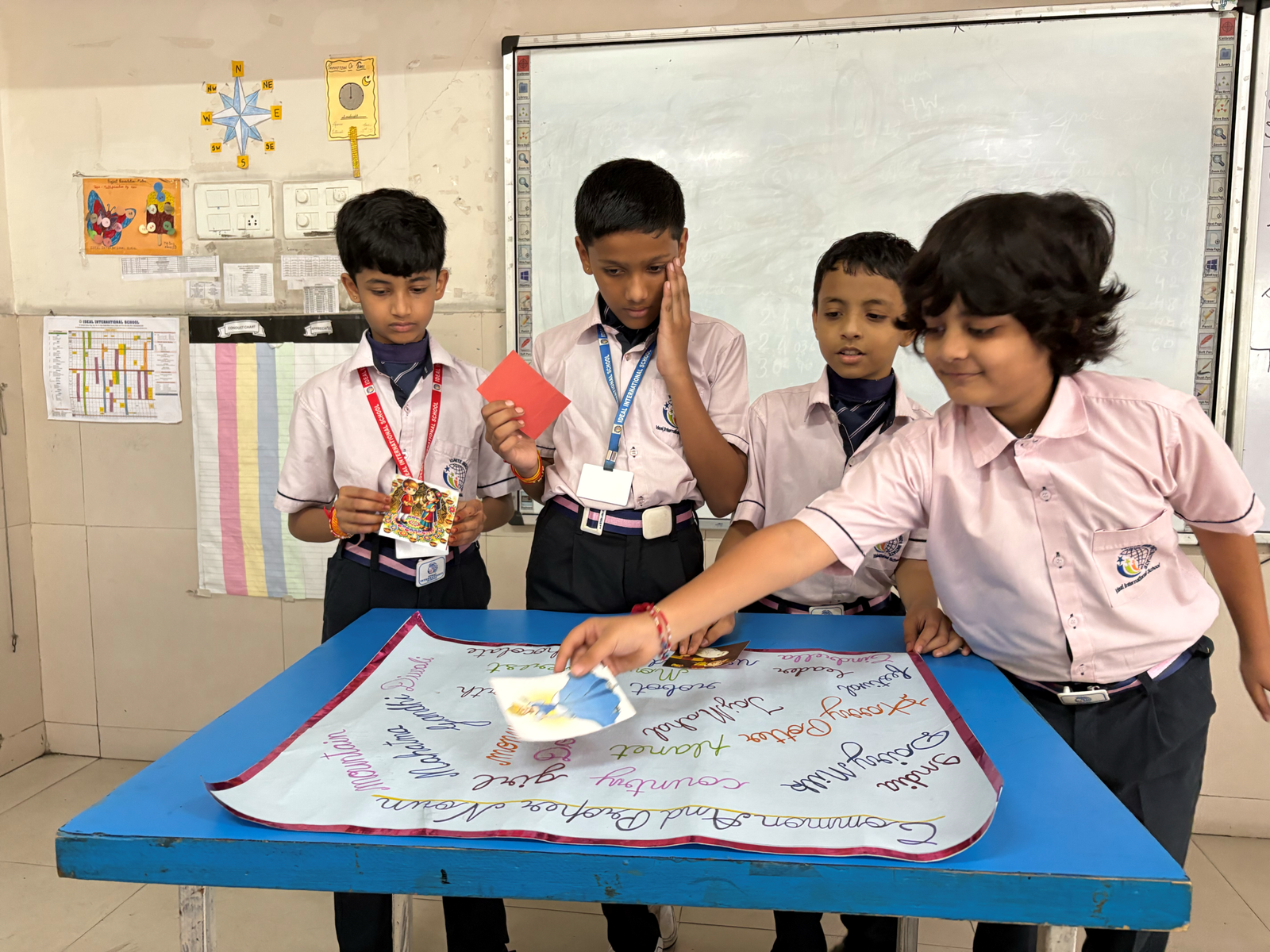
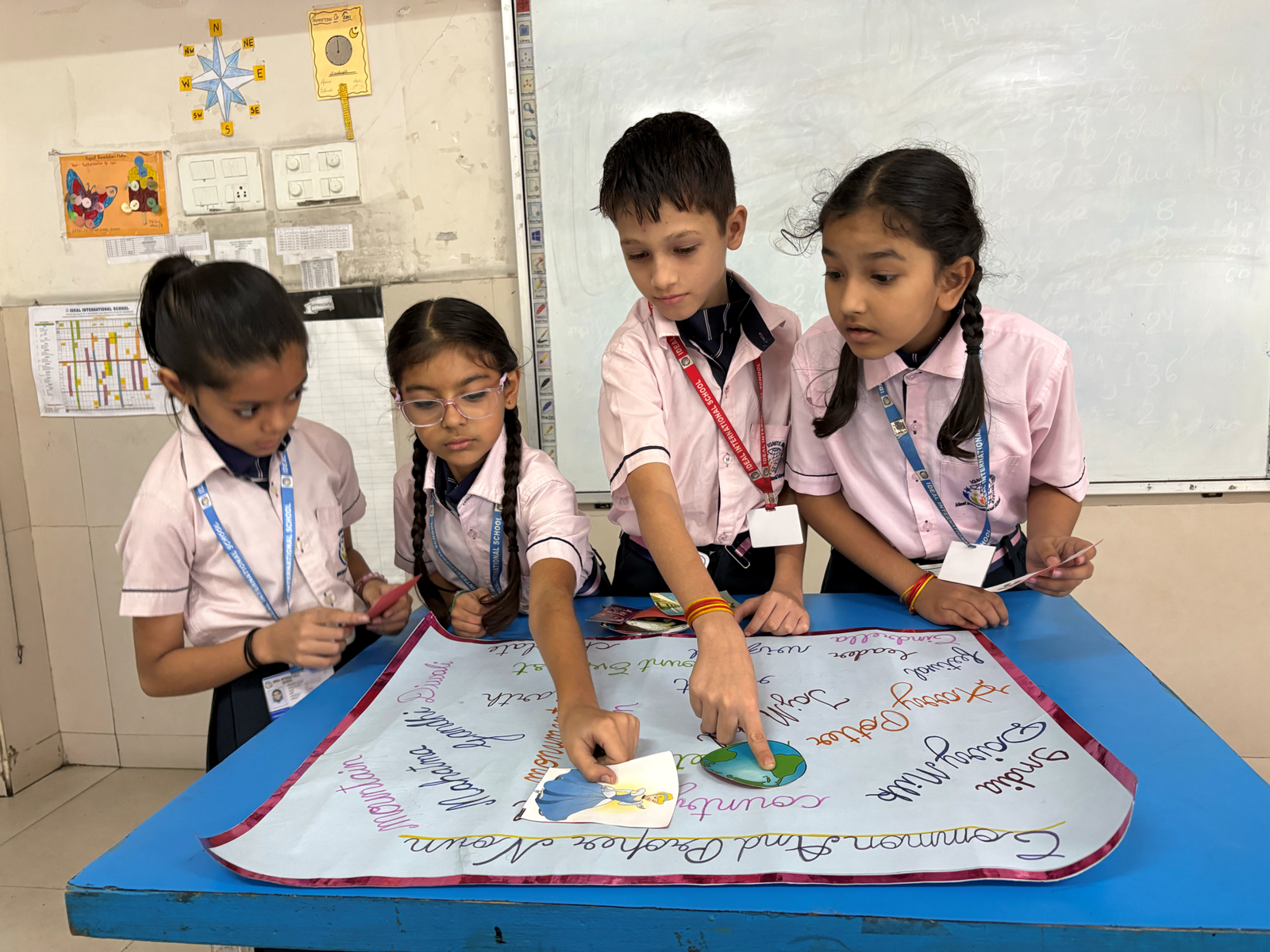
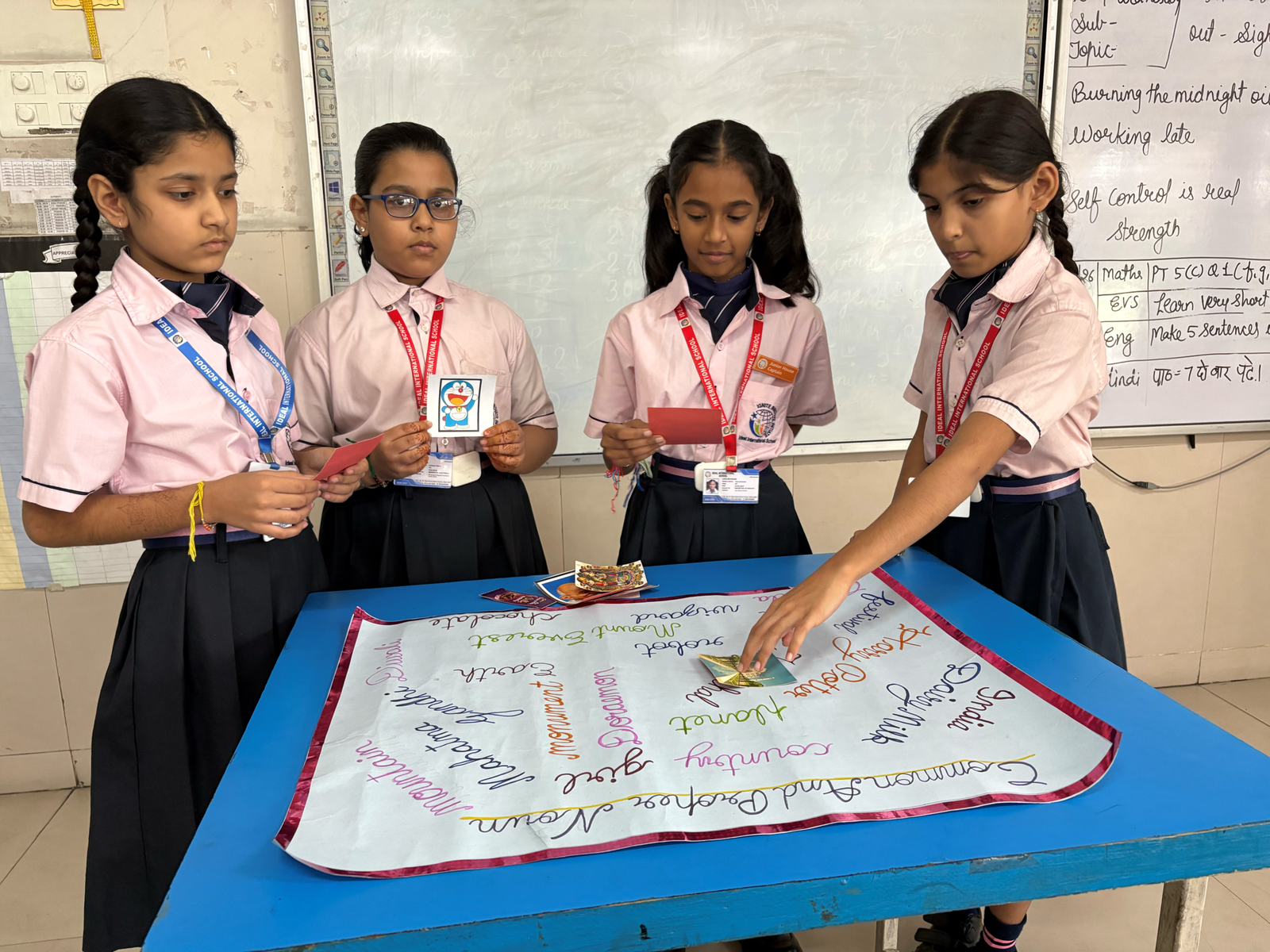
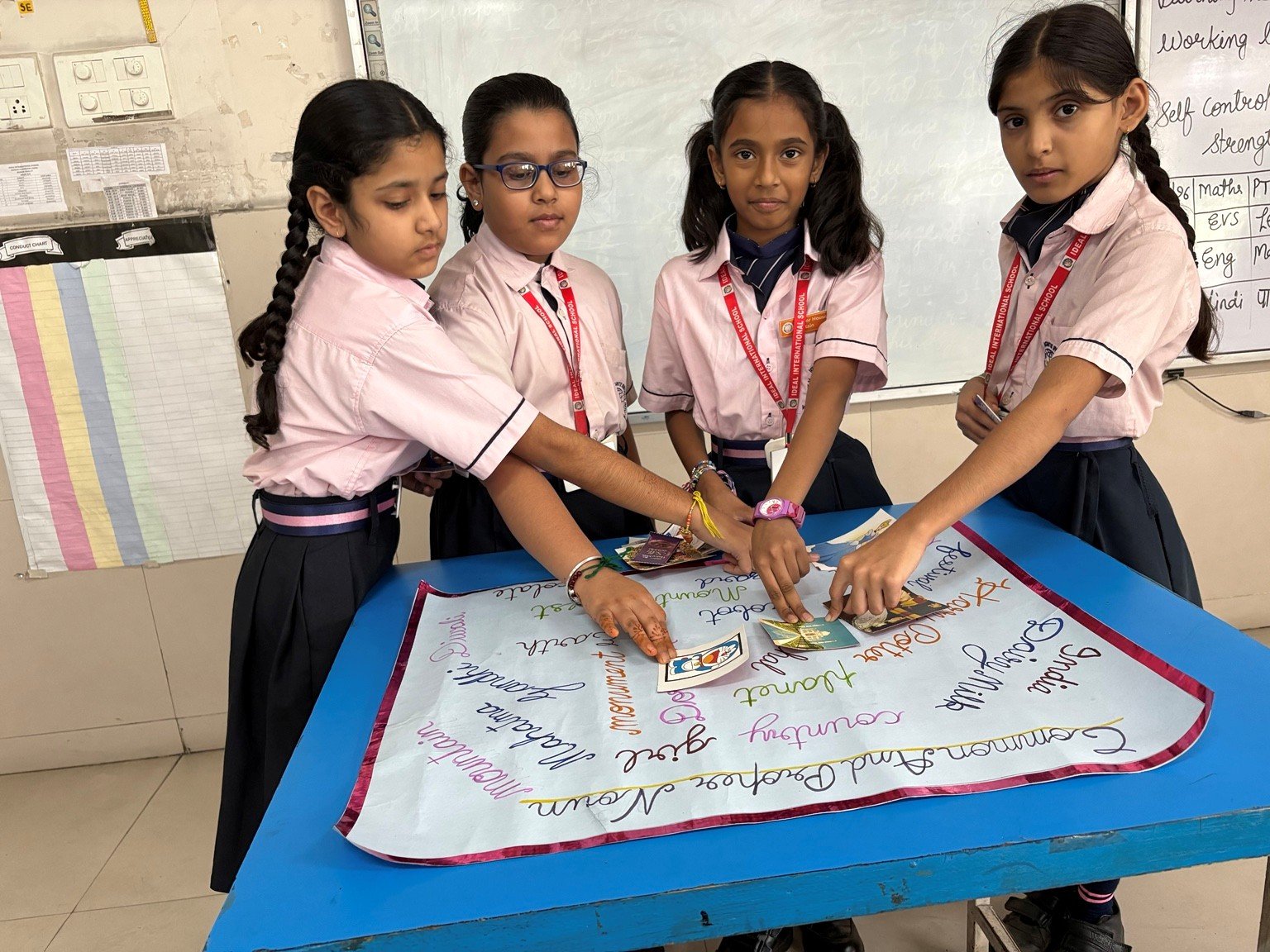
In Grade 1 English class, students explored the topic of
“Naming Words” through a fun and interactive activity. To help students understand the concept of naming words (nouns), a hands-on game was planned where children were given a box filled with sticks that had either pictures or names. Each child picked one stick from the box and identified what it showed. This engaging activity encouraged active participation, critical thinking, and discussion among students.
Through this game, learners were able to clearly differentiate between different categories of naming words, enhanced their vocabulary, and improved their ability to classify and identify nouns in their environment. It also fostered teamwork, confidence, and joyful learning in the classroom.
Exploring Creativity through the Story of Pinocchio
Stories have always been a magical way to teach life lessons, spark imagination, and build confidence in young learners. To bring this magic alive, our classroom turned into a world of puppets and imagination with The Story of Pinocchio. This engaging classroom activity combined literature, art, and drama — all in one exciting project! Students not only learned about the classic tale of Pinocchio, Geppetto, and the Fairy, but also stepped into the shoes of storytellers, artists, and performers.
Using colorful craft materials, they designed and decorated their puppets with creativity and joy. Every puppet had its own unique touch — some funny, some expressive, and some incredibly artistic!
Acting Out Their Own Stories
Students used their puppets to create and act out their own version of the Pinocchio story. They wrote short dialogues, practiced expressions, and performed in front of their classmates with excitement and laughter filling the room.
The conversations between Pinocchio, Geppetto, and the Fairy came alive in the students’ voices. It was inspiring to see how each group added their own twist — some added humor, while others introduced moral lessons of honesty, friendship, and kindness.
Students confidently enacting their story with handmade puppets.
The classroom turned into a lively stage where imagination met creativity.
Learning through Creativity
This activity was not just about art or acting — it was about expression, teamwork, and imagination. Students learned to:
Work collaboratively with peers
Express emotions through dialogue and action
Develop storytelling and communication skills
Understand the moral lessons of honesty and responsibility
As a teacher, watching their enthusiasm and creativity blossom was truly heartwarming. Every child contributed in their own special way, making the classroom come alive with stories, laughter, and learning.
Students proudly displaying their colorful puppets after the performance.
Each puppet reflected a story, an idea, and a burst of creativity straight from young hearts.
Reflection
Through this activity, students realized that learning can go beyond textbooks — it can be experienced, felt, and expressed through creativity. The story of Pinocchio served as a reminder that truth, kindness, and courage are the qualities that make us truly human.
In the end, our classroom was not just a space of learning — it became a stage of imagination, joy, and discovery.
Introduction : Mathematics becomes more meaningful when learners actively participate in hands-on activities. To strengthen the understanding of the National and International System of Numeration, Grade 5 students of our school took part in an engaging classroom activity that encouraged collaboration, critical thinking, and conceptual clarity.
Activity Description:
Students were divided into groups and provided with digit cards. Working together, they arranged the cards to form large numbers and placed commas according to both the Indian (National) and Western (International) systems of numeration. They then practiced reading the numbers aloud in both systems, identifying the differences between terms such as lakhs and crores in the National system and millions and billions in the International system.
This interactive approach allowed students to visualize the grouping of digits more clearly and strengthened their ability to interpret and express numbers in both formats.
Learning Outcomes :
The activity not only enhanced students’ numerical skills but also encouraged teamwork, logical reasoning, and effective communication. Learners developed greater confidence in applying their knowledge of numeration and showcased enthusiasm while presenting their answers. The session transformed abstract mathematical rules into an enjoyable, practical learning experience.
National and International System of Numeration Activity 3
National and International System of Numeration Activity 2
National and International System of Numeration Activity 1
National and International System of Numeration Activity
×
Reach out to us
Please fill out the inquiry form and we will contact you