
A Little Water, Three Simple Processes, and a Big Scientific Idea
Students explored how insoluble impurities can be removed from water using three simple physical methods—sedimentation, decantation and filtration. Rather than only reading about these processes, they observed each stage practically and compared the water before and after treatment.
| AIM To observe the removal of insoluble impurities from water by sedimentation, decantation and filtration. |
Materials Used
Beakers, muddy water, a glass funnel, filter paper, and a conical flask.
1. Sedimentation — Letting the Heavy Impurities Settle
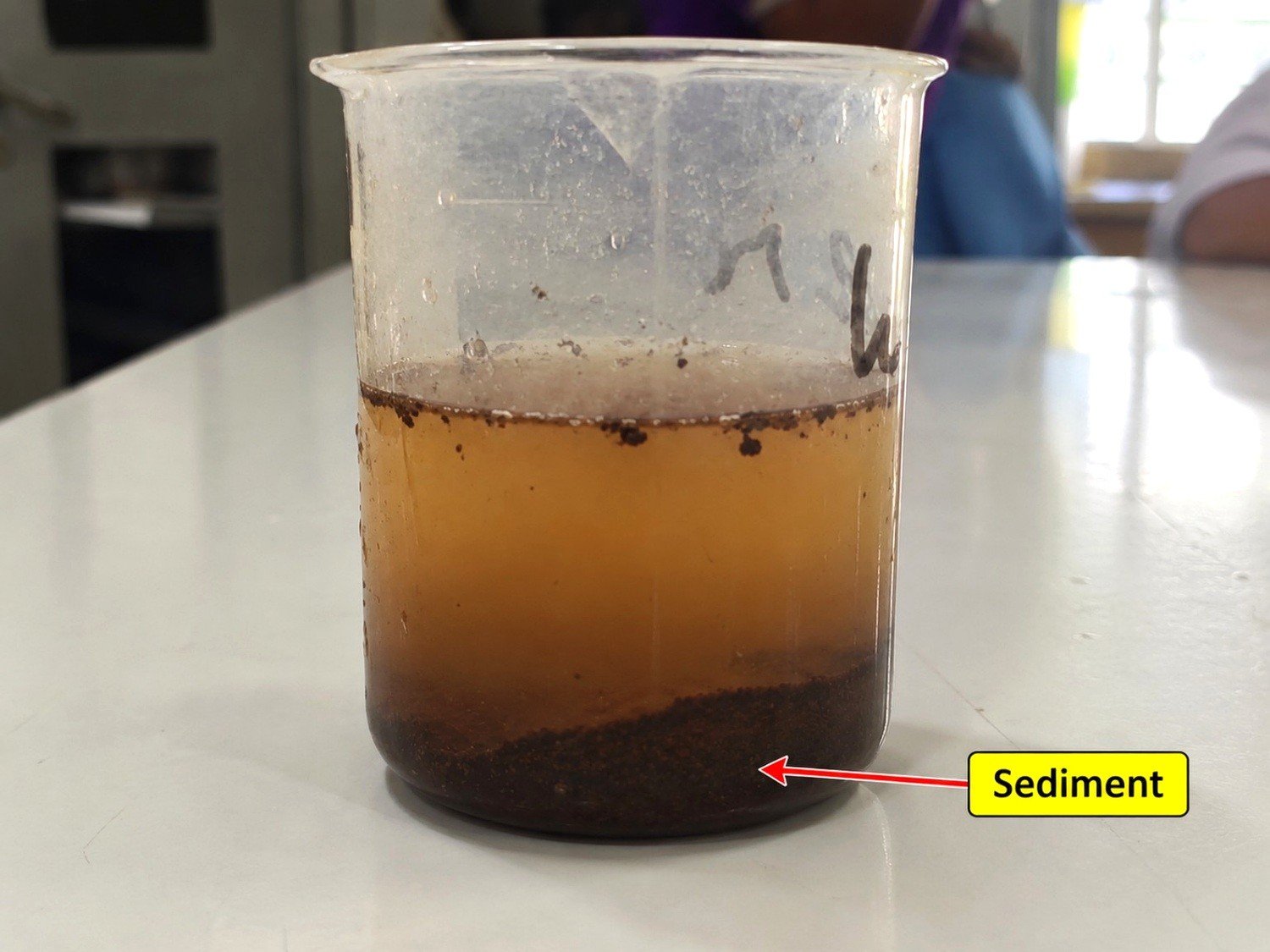
The muddy water was kept undisturbed for some time. The heavier insoluble particles gradually moved downwards under the action of gravity and collected at the bottom of the beaker. This settled material is called the sediment, while the clearer liquid remains above it.
2.Decantation — Carefully Pouring Off the Clearer Water
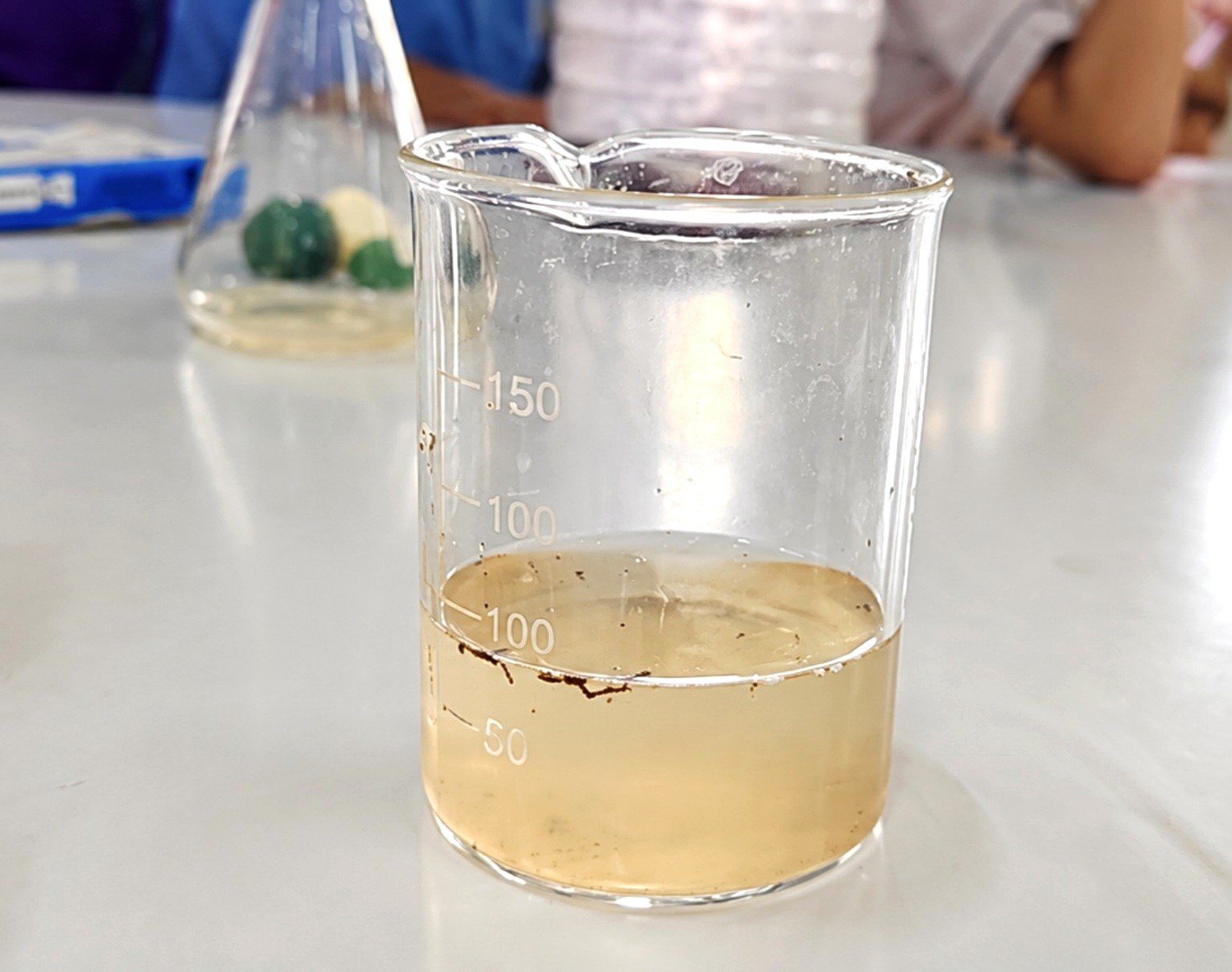
After sedimentation, the clearer water was carefully poured into another beaker without disturbing the settled impurities. This process is called decantation. Some fine impurities may still remain suspended in the water, so the water is clearer but not completely free from insoluble particles.
3.Filtration — Trapping the Remaining Insoluble Impurities
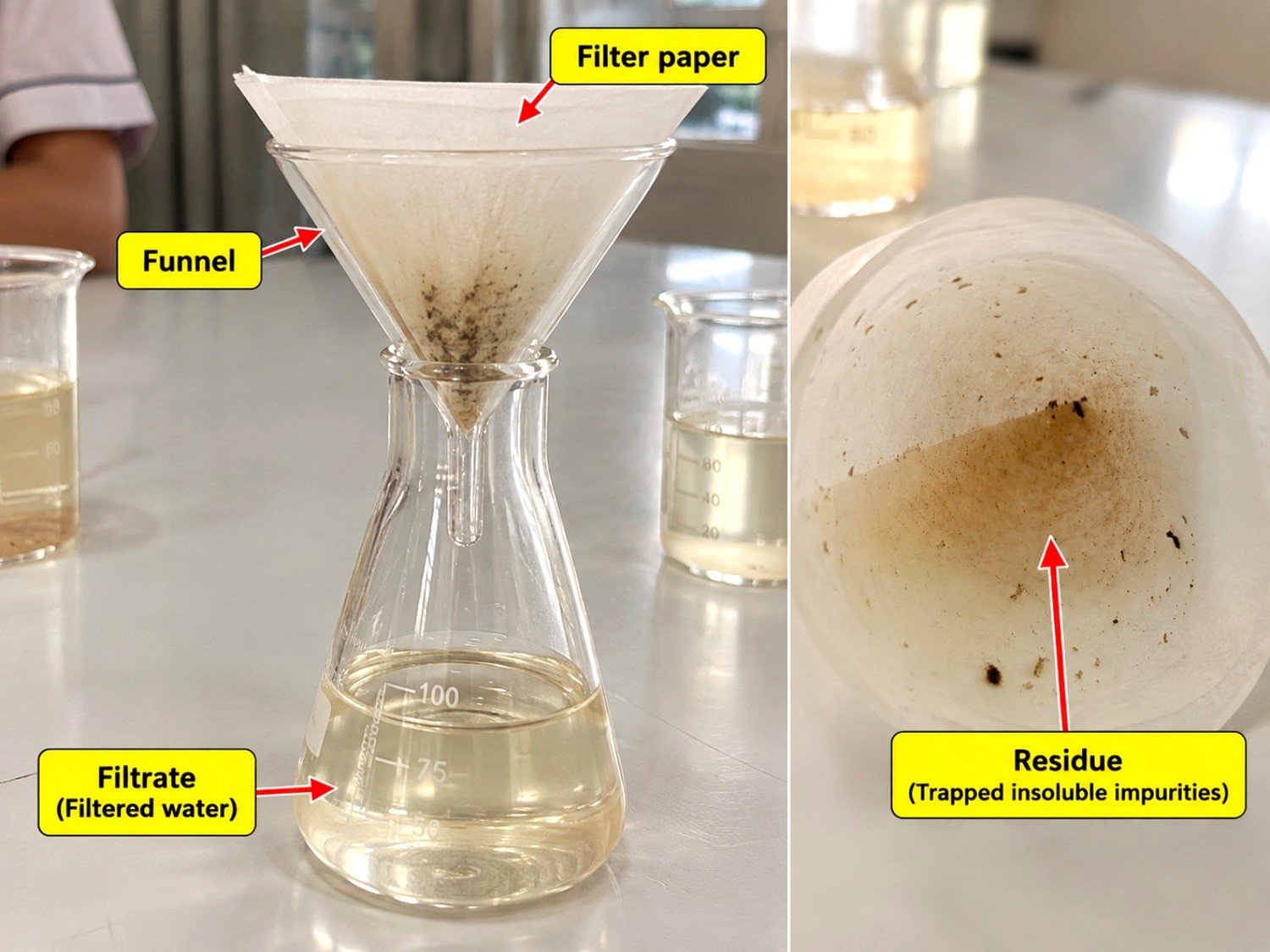
The decanted water was passed through a funnel lined with filter paper. The filter paper allowed water to pass through but trapped the remaining insoluble particles. The liquid collected in the flask is called the filtrate, while the insoluble material retained on the filter paper is called the residue.
A Clear Difference at Every Stage
The final comparison made the effect of the three processes easy to see: the original muddy water contained visible impurities, sedimentation and decantation made it clearer, and filtration produced the clearest water obtained in the experiment.
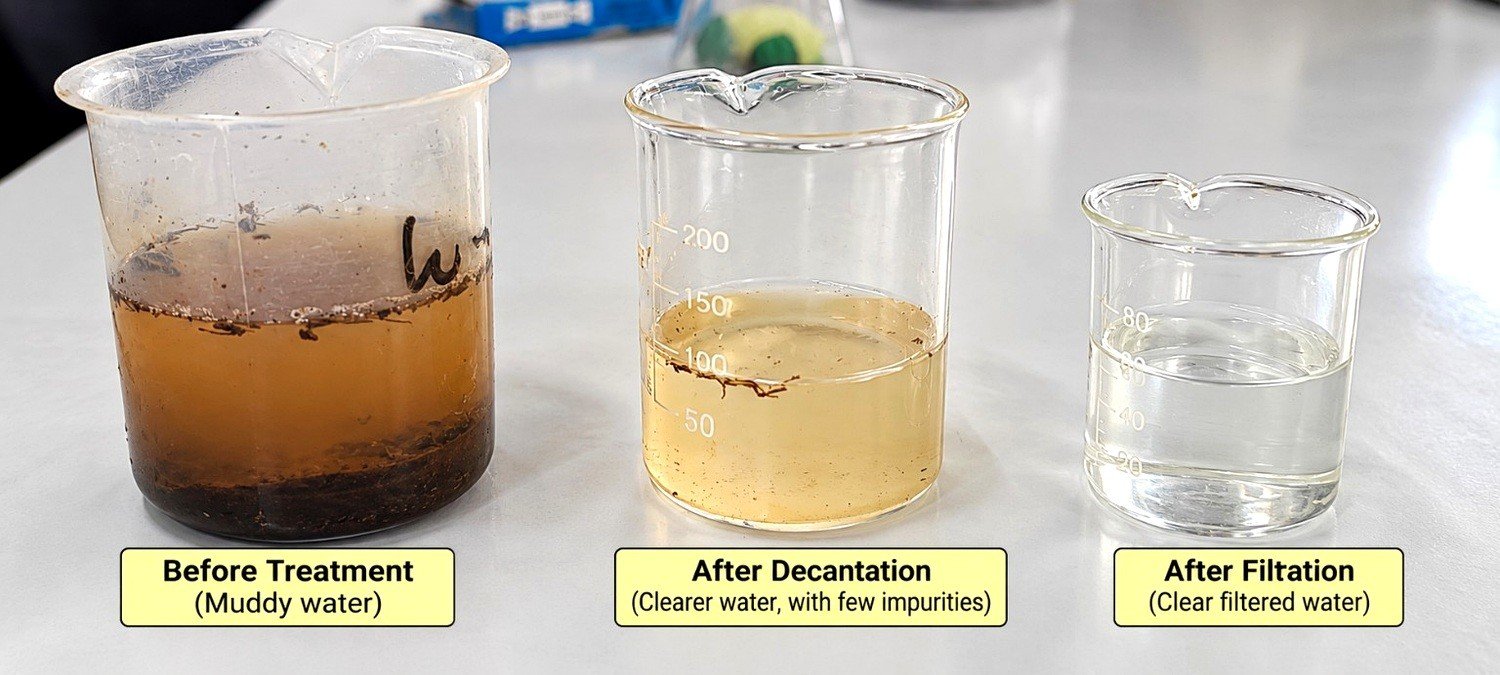
What We Observed
| Process | What happened? | What we obtained |
| Sedimentation | Heavy insoluble particles settled at the bottom. | Sediment + clearer water above |
| Decantation | The clearer upper layer was carefully poured off. | Water with fewer visible impurities |
| Filtration | Filter paper trapped remaining insoluble particles. | Clearer filtrate + residue |
Result & Learning
Result: Insoluble impurities were progressively removed from muddy water through sedimentation, decantation and filtration.
Learning: The activity showed students that water can be made visibly clearer by using simple physical separation methods. Each process has a specific role, and combining them gives a more effective separation of insoluble impurities.
“Science becomes meaningful when we can see it, do it, and explain it.”