Learning becomes more meaningful when students can observe a concept through a hands-on activity. As part of the EVS lesson on Air, students explored two important properties of air — air has mass and air occupies space.
Experiment 1: Air Has Mass
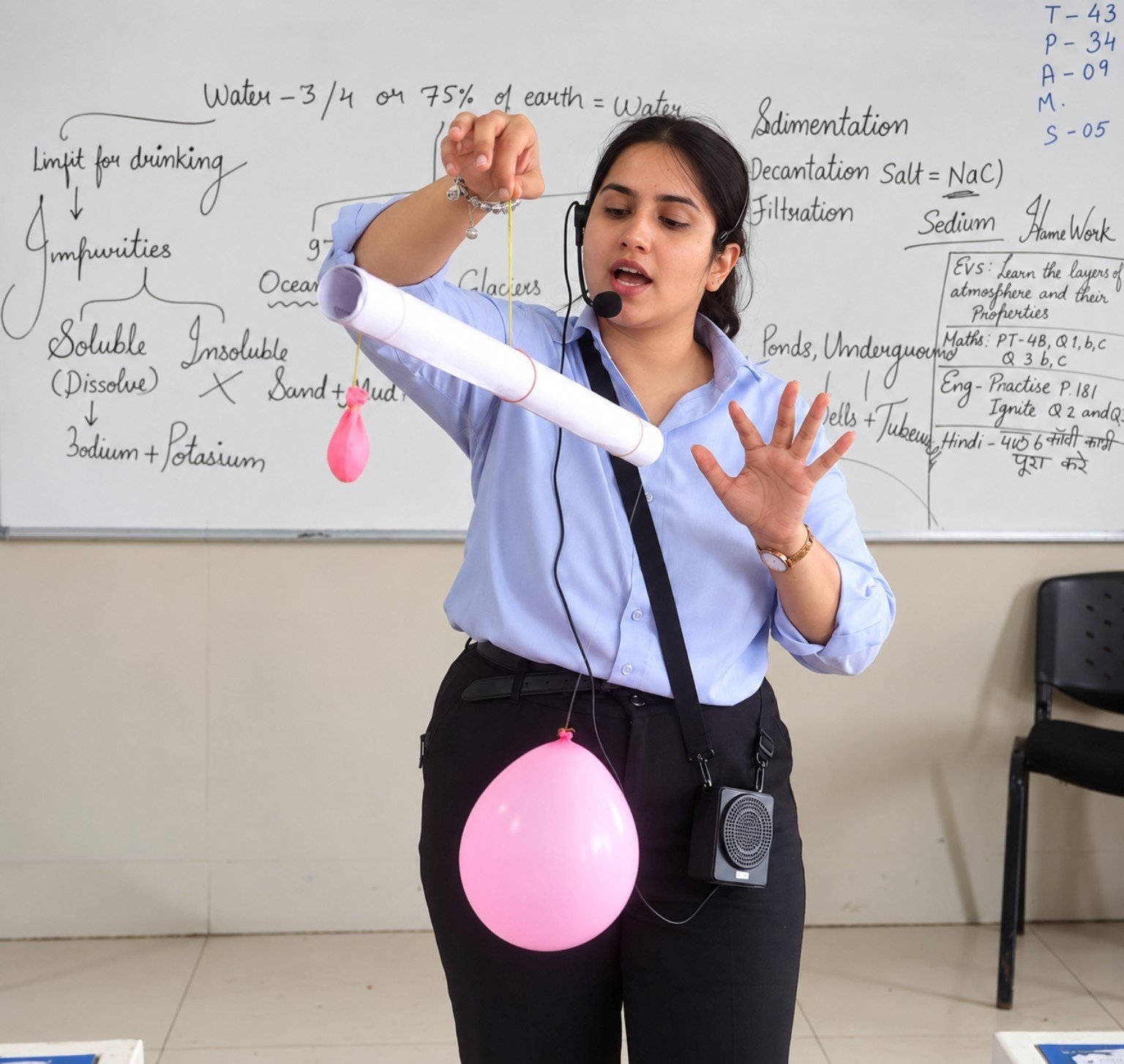
Two balloons were tied to the two sides of a light rod. One balloon was inflated while the other was left uninflated. The side with the inflated balloon bent downward, helping students understand that the air inside the balloon adds mass.
A simple demonstration showing that the inflated balloon adds mass.
Experiment 2: Air Occupies Space
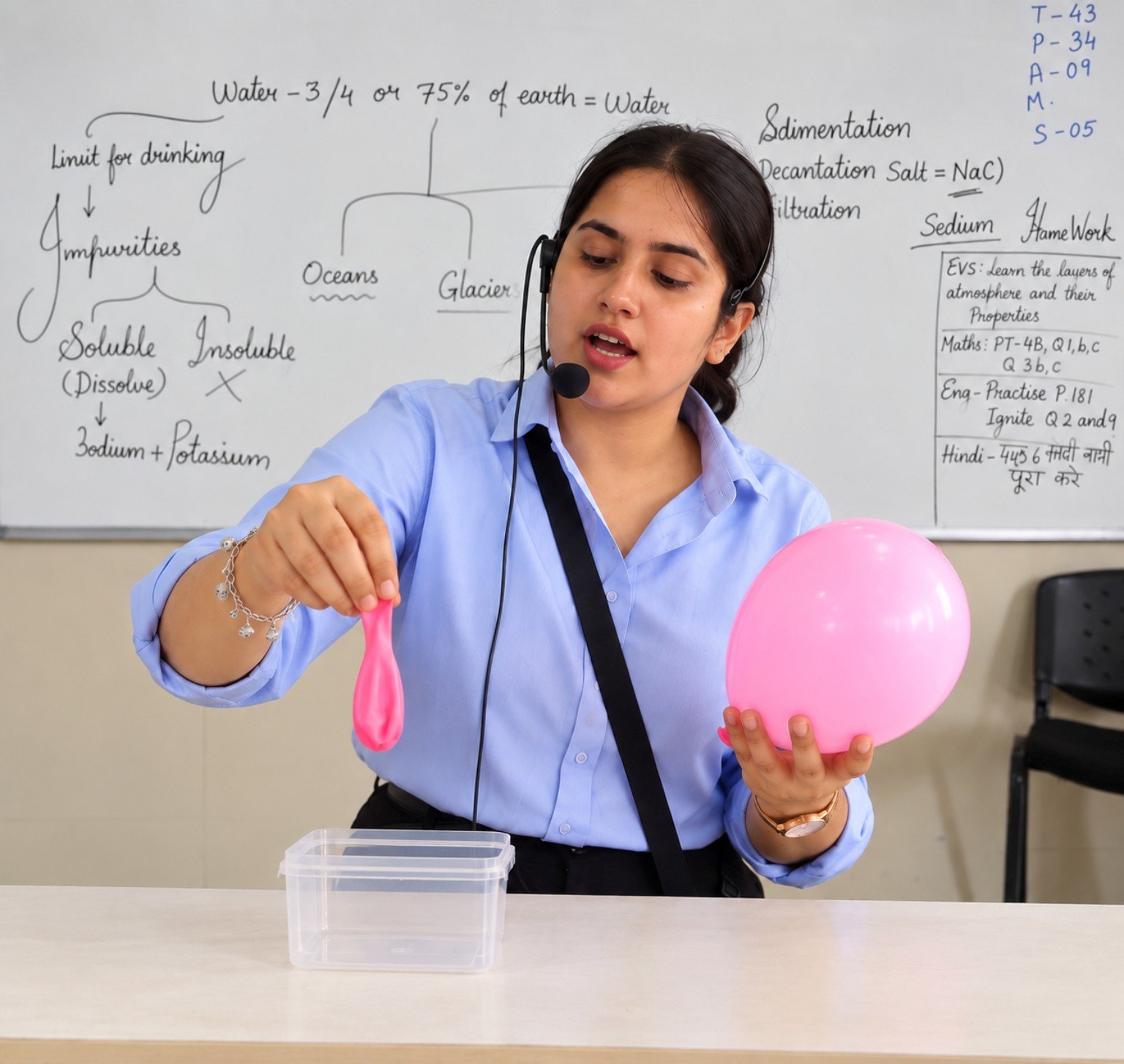
For the second experiment, students used a small transparent plastic box and a balloon. The deflated balloon could be placed inside the box easily, but the inflated balloon could not fit. This simple observation helped students understand that air occupies space.
Demonstrating that an inflated balloon occupies space.
Learning Together
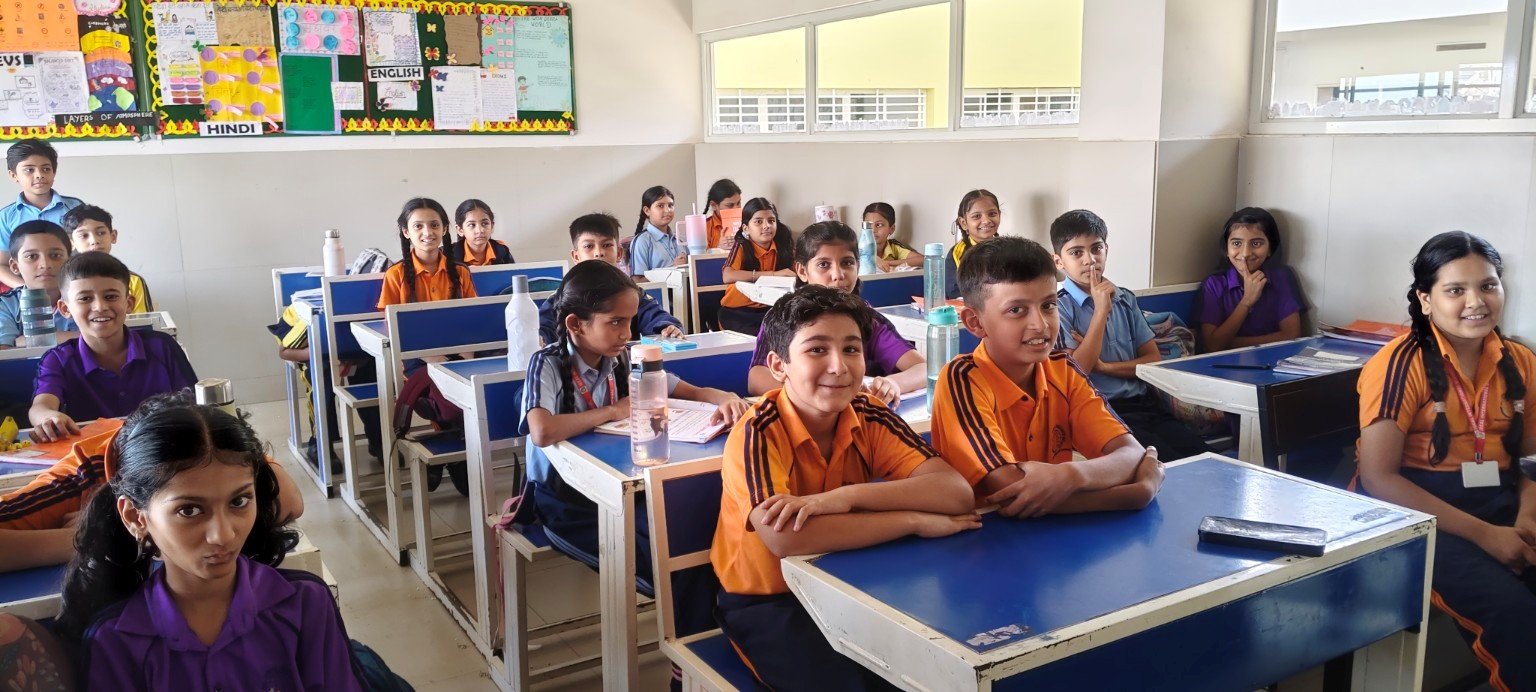
Students watched the demonstrations closely and discussed what they observed. The activities encouraged curiosity, observation and scientific thinking while connecting the EVS concept with everyday objects.
Students engaged in the EVS learning experience.
Learning Outcomes
- Understood that air has mass.
- Understood that air occupies space.
- Developed observation and reasoning skills.
- Connected classroom learning with real-life experiences.
Reflection
The activities turned a simple EVS concept into an engaging learning experience. By observing the bending rod and the balloon experiment with the box, students were able to understand that air, although invisible, has mass and occupies space.